Deko is a multi-lender payment platform designed to enable flexible checkout finance for both merchants and consumers. Its core proposition is to support any basket, anytime, anywhere, allowing businesses to offer tailored financing options seamlessly within the purchasing journey.
The platform connects multiple lenders in a single ecosystem, intelligently matching customers with suitable finance options to improve conversion rates and create a smoother checkout experience. By centralising lender integrations, Deko reduces complexity for merchants while increasing accessibility to finance for end users.
With a strong focus on scalability and continuous expansion, Deko evolves its offering to meet diverse business needs, positioning itself as a trusted partner in retail finance. Its product culture is grounded in clear values - doing the right thing, being bold, and operating as one team - which support collaborative delivery and customer-centric decision-making.
Lender Documents Management Tool
Enabling scalable, self-serve document management for B2B financial services.
Overview
The Lender Documents Management Tool was designed as a back-office SaaS solution enabling lenders to create, manage, and maintain their own legal and customer-facing documents within the platform. Previously, document updates and onboarding required heavy involvement from internal engineering teams, creating bottlenecks and increasing operational costs. This became particularly critical in the context of upcoming GDPR regulations, which required frequent updates to legal content and policies. The goal was to shift from a service-led model to a self-serve product experience, giving lenders full control over their documents while improving scalability on our side.
My Role
Product Designer
I led the end-to-end design process, including:
product discovery and stakeholder workshops
user research with lenders and internal teams
defining UX strategy and workflows
designing wireframes, prototypes, and high-fidelity interfaces
supporting validation and iterative delivery
contributing to the design system and UI library
The Challenge
The core challenge was both product and behavioural.
From a product perspective, we needed to design a system that could support:
complex legal documents (e.g. credit agreements, privacy policies)
multiple user types (lenders and white-label clients)
secure, compliant, and auditable workflows
From a business perspective, we needed to validate whether lenders would be willing to take ownership of document management, a responsibility previously handled by our internal teams. The solution also had to integrate seamlessly into the customer journey, ensuring that document updates would not disrupt the end-user experience.
Discovery & Assumptions
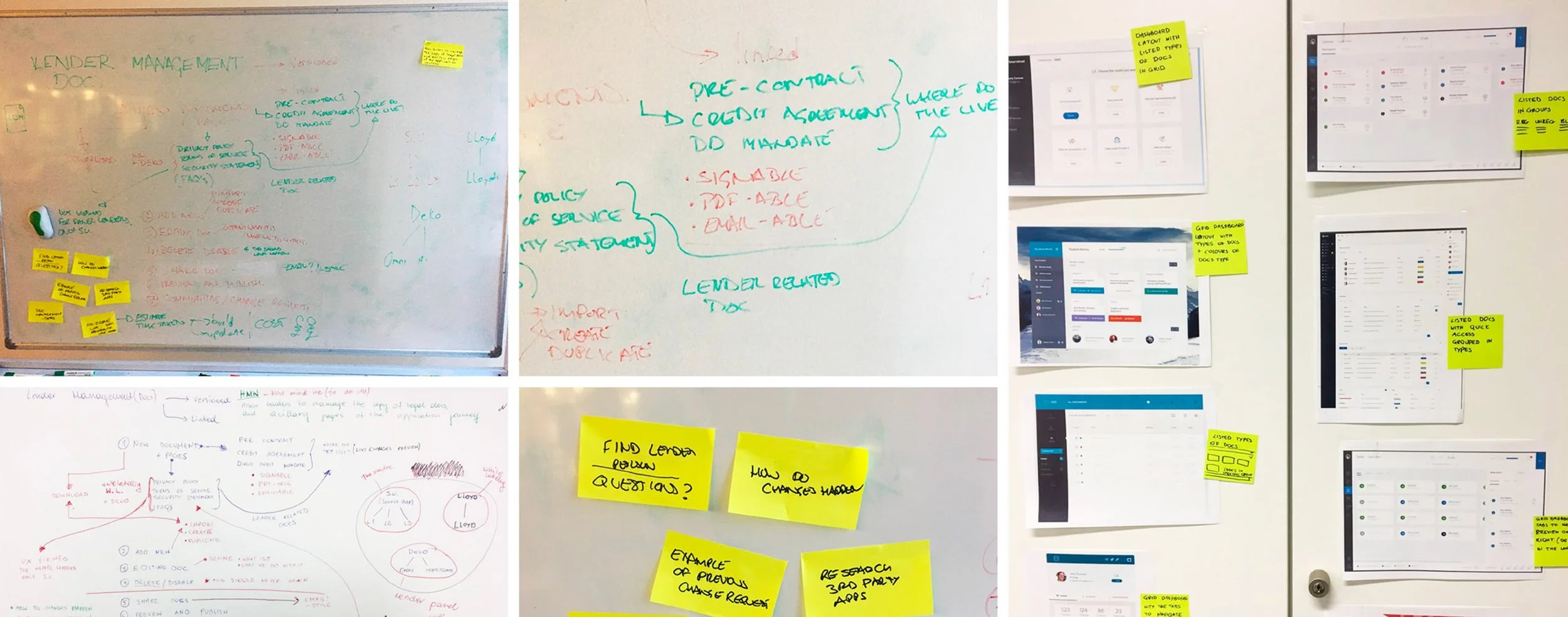
We began by defining and validating key assumptions around:
lenders’ willingness to manage their own documents
the feasibility of embedding their internal processes into our platform
the need for centralised document management
expectations around version control, approvals, and audit history
To validate these, we conducted lender interviews to understand:
how documents were currently created and maintained
who was involved in the process
how often updates occurred
where inefficiencies and risks existed
We translated these insights into “How Might We” problem statements, which guided the design direction and prioritisation.
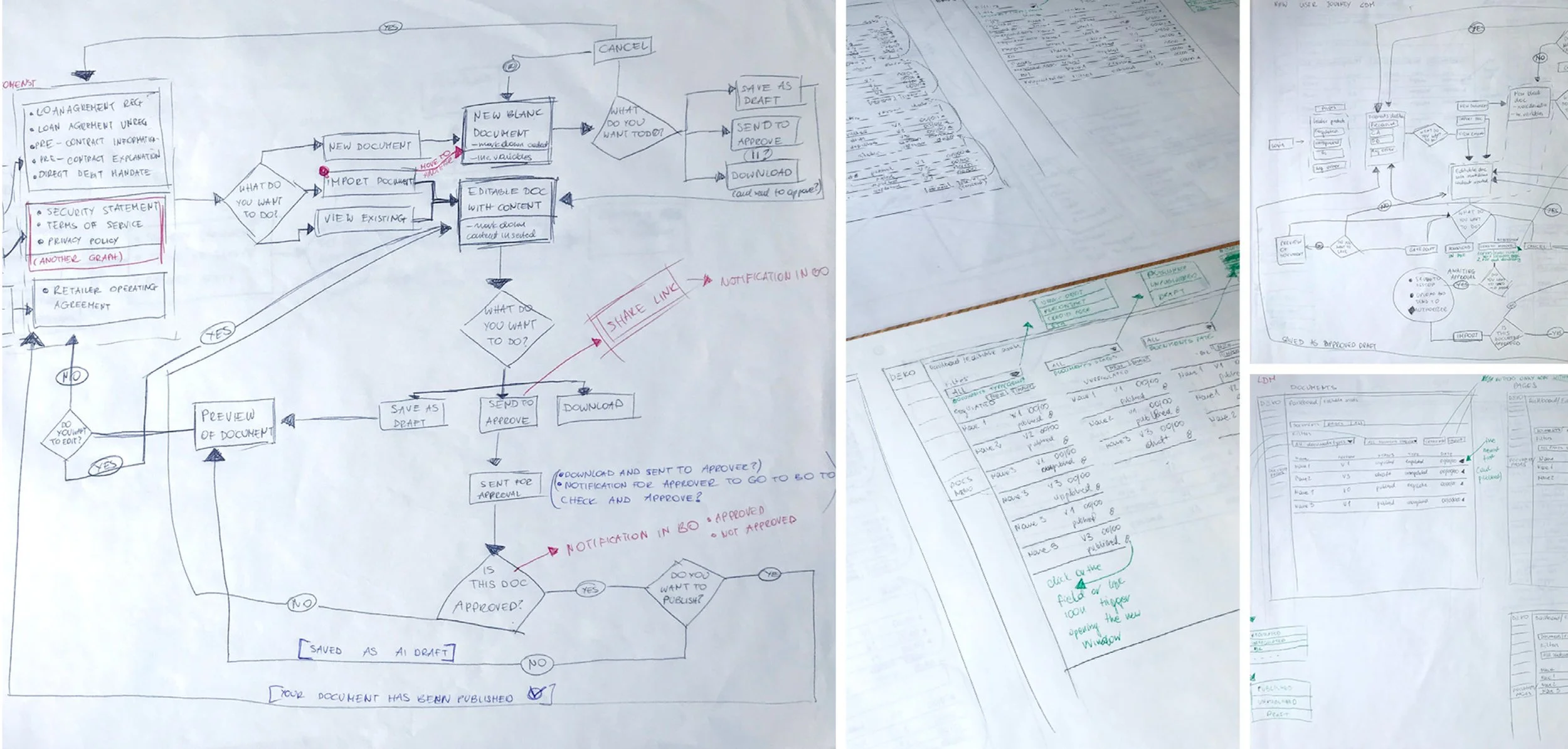
Research & Exploration
The discovery phase focused on understanding how lenders and internal operational teams managed legal documents, compliance pages, and customer-facing content across the platform. At the time, most document updates relied heavily on engineering support, creating operational bottlenecks and increasing the time and cost associated with onboarding new lenders or making compliance-related changes.
Given the upcoming GDPR regulation changes, the urgency around document management and version control became even more significant. We needed to understand whether lenders would be willing to take ownership of managing their own documentation directly through the platform, while also identifying the operational, legal, and usability constraints involved in handing over this level of control.
To validate assumptions, we conducted exploratory workshops and stakeholder interviews focused on current workflows, approval processes, governance requirements, and document lifecycle management. The research helped uncover common operational pain points, including fragmented document ownership, lack of visibility into publishing states, and slow turnaround times for updates requiring engineering involvement.
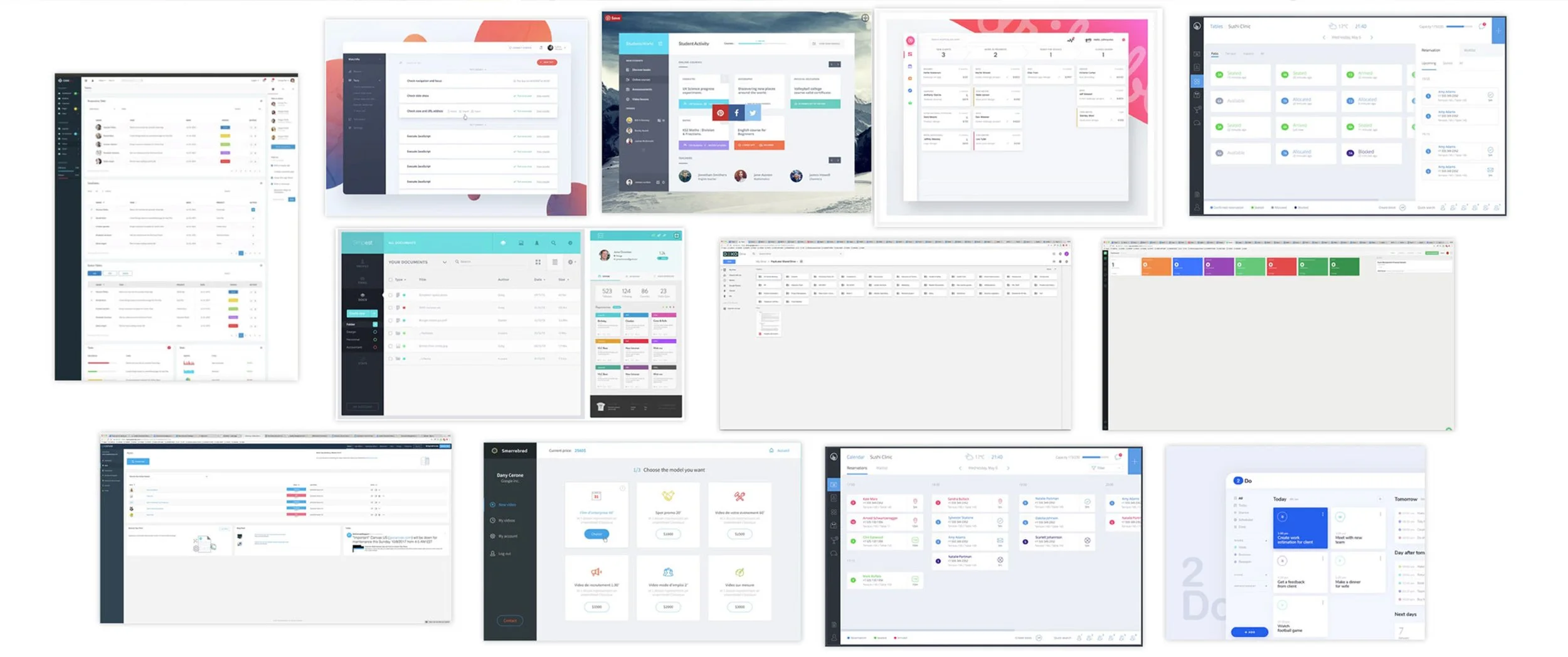
We also explored existing document management and CMS-style tools on the market to better understand established interaction patterns, permissions structures, and version control mechanisms that could inform the product direction. These insights helped define a feature set that balanced usability, compliance, and flexibility, the strategic opportunity and the scope for the initial MVP.
To inform the solution, we explored:
competitor offerings in the lending space
existing document management systems
best practices for handling versioning, permissions, and workflows
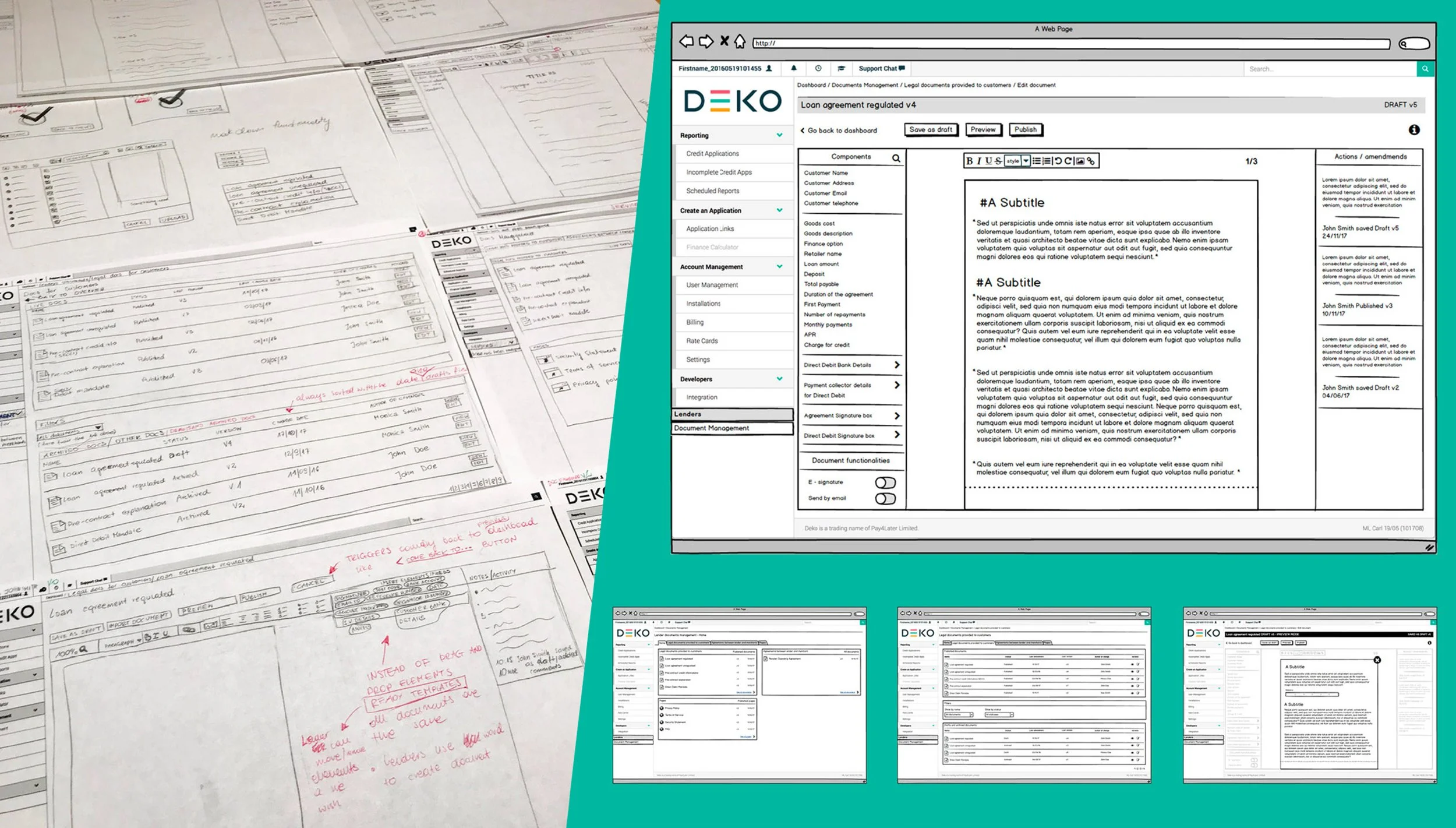
Design & Validation
The design phase focused on creating a workflow that balanced flexibility for lenders with the governance, security, and compliance requirements of the financial industry. Because the product would eventually be used by external lenders managing legally sensitive content, clarity, traceability, and ease of use became critical aspects of the experience.
Early concepts were explored through low-fidelity wireframes and clickable prototypes, allowing workflows to be validated before development. Particular attention was given to the creation, editing, approval, and publishing states of documents, ensuring that users always understood the current status and visibility of their content.
Testing was conducted iteratively across different stages of the design process with both internal stakeholders and selected lenders. This helped validate whether the workflows aligned with real operational processes while identifying gaps around permissions, authorisation flows, and version visibility. The product evolved rapidly through feedback cycles, gradually moving from operational feasibility testing towards a scalable external-facing platform capability.
I developed interactive wireframes and prototypes to validate key workflows with both internal stakeholders and prospective users.
Testing focused on:
clarity of document management workflows
ease of editing and publishing
visibility of document status and lifecycle
Design iterations were informed by continuous feedback across multiple stages of development, ensuring the product addressed both user needs and regulatory requirements.
MVP & Product Evolution
The initial MVP focused on solving the core operational dependency between lenders and engineering teams. Before the tool existed, even relatively small document changes often required developer involvement, creating delays and increasing operational overhead for both sides.
To reduce risk, the first iteration of the product was released internally before expanding to external lenders. This allowed the workflows, permissions, and publishing logic to be tested safely within live operational environments while validating usability and technical feasibility.
The MVP introduced foundational document management capabilities, including:
Creating and editing documents directly within the platform
Saving documents as drafts before publication
Publishing and managing document visibility states
Viewing all existing documents and statuses
Basic document organisation and editing workflows
Following successful internal adoption and positive feedback from lenders, the product continued evolving into a more advanced document management ecosystem. Additional iterations introduced:
Version control and document history tracking
Publishing dates and improved audit visibility
Approval and authorisation workflows
Basic document styling and formatting tools
Import functionality for external documents
Improved management of customer journey content and legal pages
As the platform matured, the tool became increasingly embedded within lender operational workflows, helping organisations manage compliance-related updates more independently and efficiently. The iterative approach allowed the product to continuously adapt to different lender requirements while maintaining security and governance standards expected within the finance industry.
Impact
The Lender Document Management Tool delivered significant operational improvements for both lenders and internal teams. By shifting document ownership and editing capabilities closer to lenders, the platform reduced operational dependencies on engineering teams and accelerated the turnaround time for legal and compliance-related updates.
The product also improved scalability across the business by simplifying lender onboarding and reducing the internal effort required to manage multiple lender-specific customer journeys and document variations. This became particularly valuable during periods of regulatory change, where fast updates and strong version control were essential.
For lenders, the tool introduced greater autonomy, flexibility, and transparency into document management processes, helping strengthen trust and collaboration with the platform. The product ultimately evolved from an internal operational improvement into a commercially valuable capability supporting long-term client relationships and platform scalability.
The tool delivered both business and operational impact:
Enabled lenders to independently manage their documents in real time
Reduced reliance on engineering teams, improving scalability
Lowered operational costs related to onboarding and updates
Improved compliance readiness, particularly around GDPR requirements
Strengthened relationships with lenders through increased ownership and flexibility
Design System Contribution
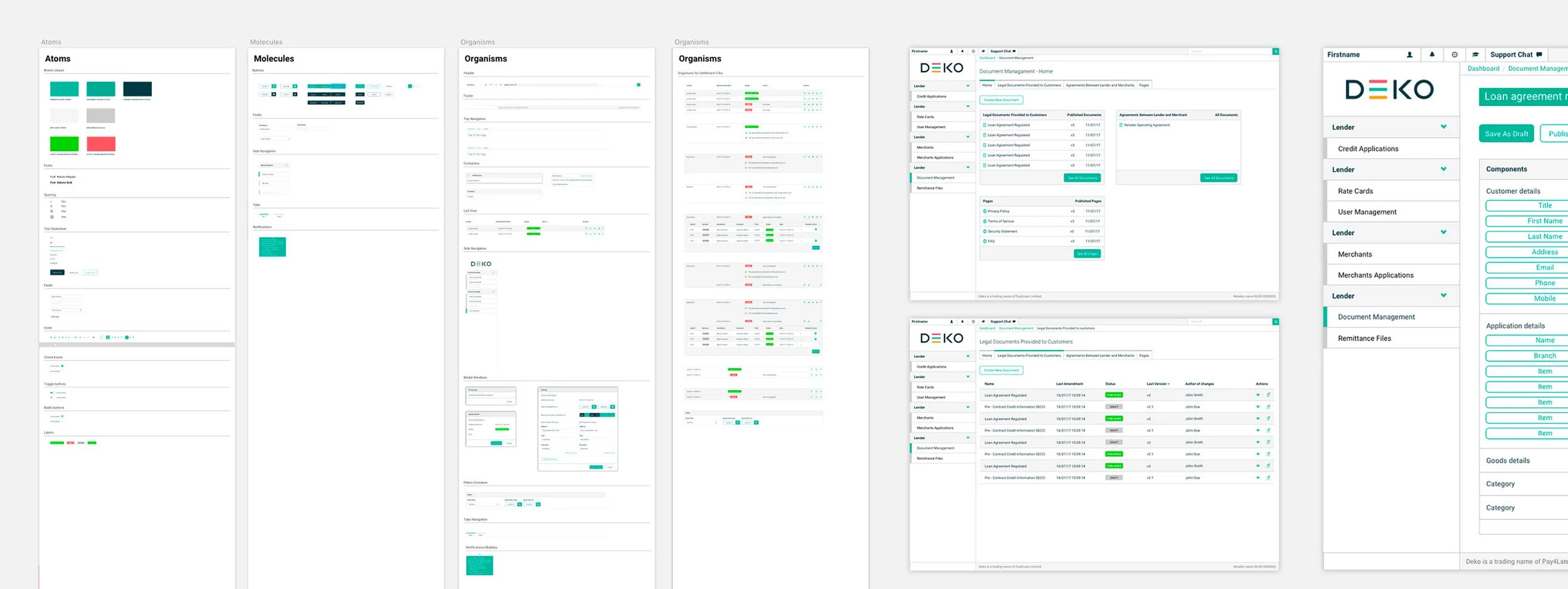
As work on back-office and operational tools expanded, the project also contributed to the evolution of a broader Back Office Design System. The complexity and scale of internal tooling highlighted the need for greater consistency, reusability, and efficiency across product development.
Using Atomic Design principles, reusable UI foundations were introduced across the platform, starting from atoms and smaller interface components through to larger templates and complete page structures. The design system helped standardise interaction patterns, layouts, states, and behaviours across products, improving both user experience consistency and collaboration with engineering teams.
The Document Management Tool introduced several new system patterns related to workflow states, publishing flows, permissions, tables, document statuses, and content management interactions. These patterns later informed other internal operational tools and contributed to faster delivery cycles, improved scalability, and more cohesive product experiences across the wider platform ecosystem.
As part of this work, I contributed to building a scalable design system based on atomic design principles, supporting faster delivery and consistency across back-office tools.
This included:
defining reusable UI components
establishing layout patterns and constraints
improving collaboration between design and engineering