
Concirrus Inspire is an AI-native underwriting platform built specifically for specialty insurers who need to significantly increase speed, while maintaining— and even improving— decision quality in complex risk environments.
The platform unifies what has traditionally been fragmented across multiple systems by bringing together submissions, external and internal risk signals, and portfolio exposure data into a single, intelligent decision environment. This allows underwriters to move from scattered information and manual interpretation to a more connected, real-time underwriting workflow where every decision is supported by clear, contextual insights.
By consolidating these critical inputs, Concirrus Inspire enables underwriters to quickly understand not only individual risks, but also how each opportunity fits within the broader portfolio. This helps teams maintain full visibility of risk impact, reduce uncertainty, and make faster, more consistent underwriting decisions.
Beyond operational efficiency, the platform is designed to enhance strategic performance. From dramatically improving quote turnaround times to strengthening overall portfolio confidence, Inspire supports insurers in writing business that is not only faster but also more profitable and sustainable over time.
Ultimately, Concirrus empowers underwriting teams to scale with confidence—helping them handle increasing submission volumes, adapt to evolving market conditions, and stay competitive in a landscape where both precision and speed are critical to success.
Quest Cargo Project Overview
Designing a data-driven platform for risk assessment in cargo insurance. Quest Cargo is a SaaS platform designed for underwriters and brokers to support more informed decision-making when assessing cargo insurance risk. The product aggregates market data and proprietary customer datasets, enabling users to gain deeper insights into portfolios, exposure, and claims.
The goal was to transform a traditionally manual, fragmented process into a scalable, data-driven product experience.
My Role
Lead Product Designer. Responsibilities included:
Defined UX strategy and product design direction across both new and existing products, helping shift the organisation toward a more product- and design-led culture. Introduced a stronger emphasis on user-centred decision making, ensuring product direction was grounded in both customer needs and business outcomes rather than purely technical constraints.
Established scalable design systems, brand guidelines, and reusable UI components to create consistency across the platform and improve delivery speed. This work helped reduce design and engineering duplication and enabled faster iteration across multiple product areas.
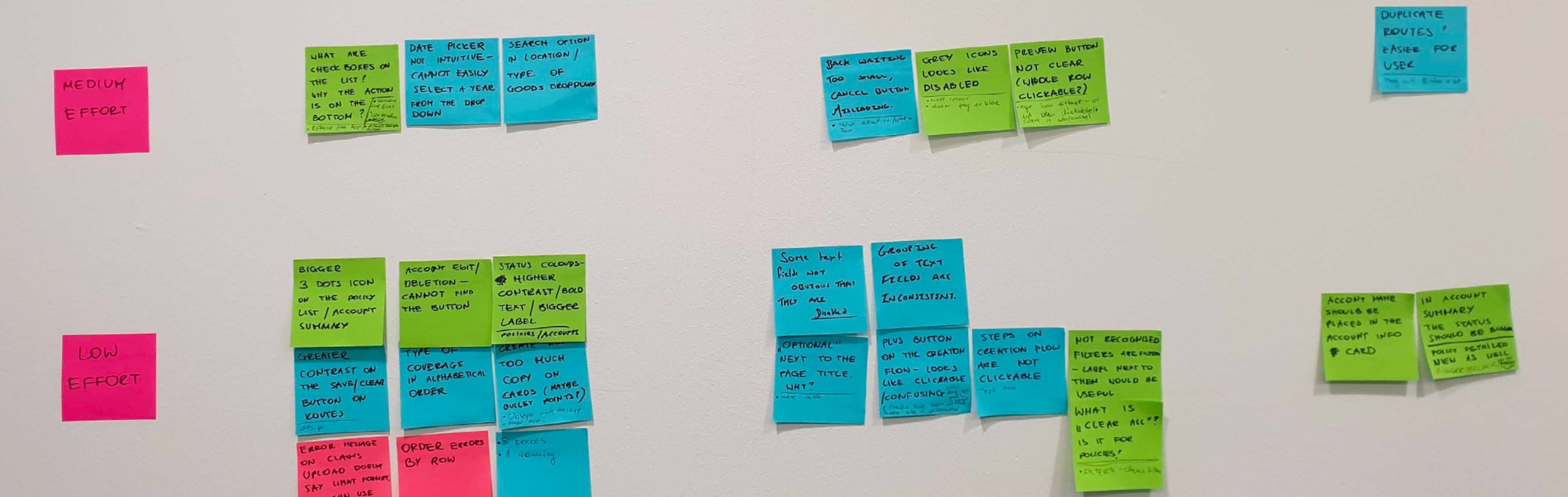
Facilitated cross-functional workshops and discovery sessions, aligning stakeholders across product, engineering, data science, and commercial teams. These sessions were key in shaping shared understanding of complex underwriting workflows and translating them into clear product opportunities.
Conducted qualitative and contextual research with internal stakeholders and subject matter experts, uncovering critical workflow pain points and identifying opportunities to simplify and modernise decision-making processes within underwriting teams.
Designed complex, data-heavy interfaces and visualisations, making large volumes of risk and portfolio data more interpretable and actionable for underwriters. Focus was placed on clarity, hierarchy, and decision support within high-density environments.
Collaborated closely with product managers, engineers, and data science teams to ensure design solutions were feasible, scalable, and aligned with technical architecture and data capabilities.
Defined and tracked product success metrics, helping to connect design decisions with measurable outcomes such as efficiency gains, improved quote turnaround times, and increased underwriting confidence.
Overall, the role was instrumental in helping introduce and embed a design-led product mindset within the organisation, which was a key reason for bringing the role in—supporting the transition toward building more cohesive, user-focused, and scalable products.
Team Structure in the Quest Cargo product
The team operated as a cross-functional product squad, consisting of:
Product Owner
Product Designer (my role)
Subject Matter Experts (SMEs) with insurance domain expertise
Frontend and Backend Engineers - all remote, based in a different countries
QA specialists
Data Science team (close collaboration)
This structure allowed us to balance technical feasibility, domain expertise, and user needs throughout the product lifecycle.
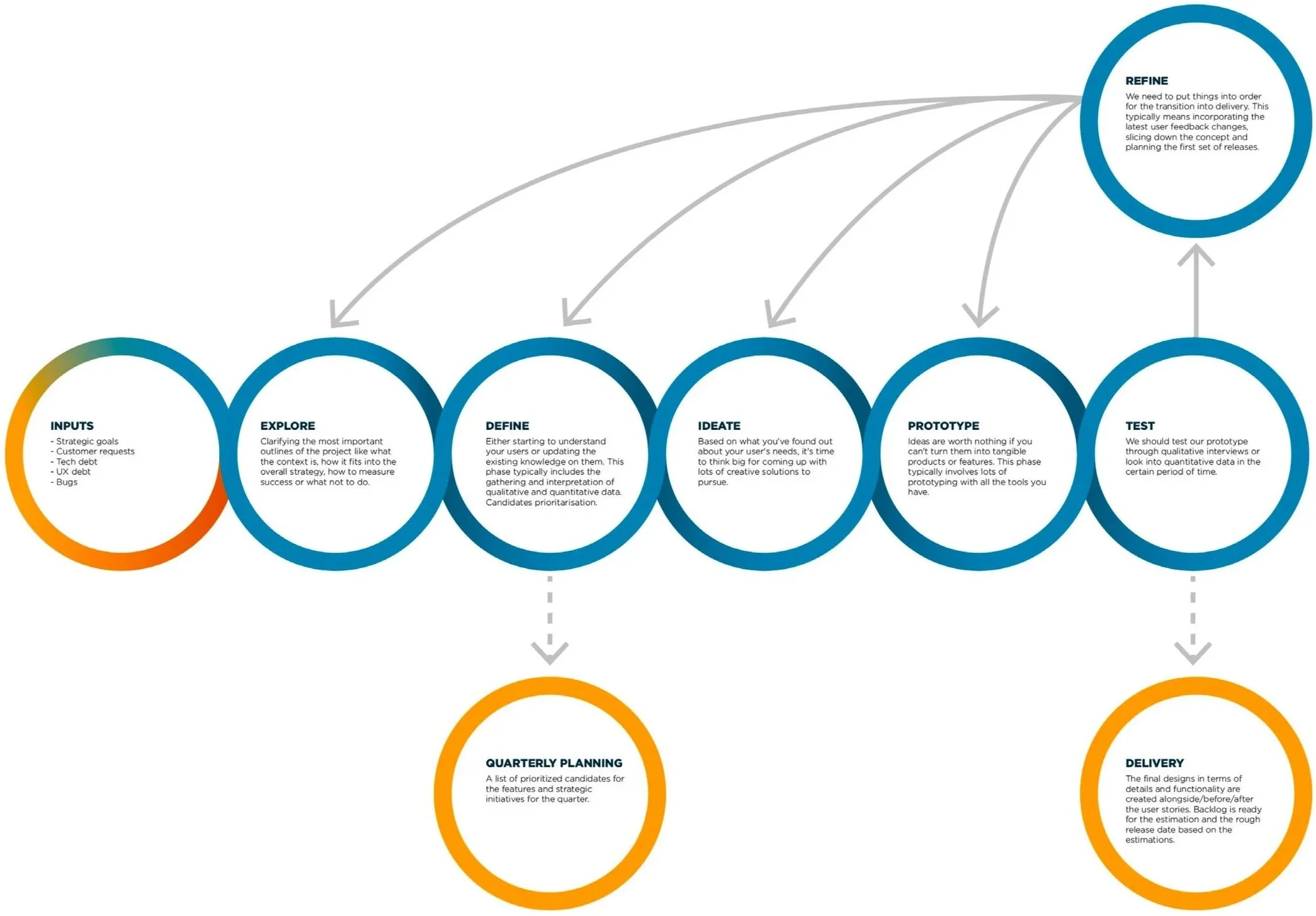
Key Constraints
Typical B2B world problems we came across as a team:
Data complexity:
The product was built on top of large, highly complex and often unstructured datasets, requiring careful consideration of how information was organised, filtered, and presented. A key challenge was turning dense, multi-layered risk and portfolio data into clear, intuitive data visualisations that supported fast, confident decision-making. This required balancing analytical depth with usability, ensuring that critical insights were not lost in overwhelming data density.Limited user access:
Direct access to end users was often restricted, which meant design decisions relied heavily on subject matter experts (SMEs), internal stakeholders, and proxy research methods. This constraint required strong facilitation and interpretation skills to accurately translate second-hand insights into real user needs, while continuously validating assumptions through iterative feedback loops.Business pressure:
There was significant commercial pressure to deliver visible product value quickly, particularly in support of sales cycles and enterprise deals. This meant prioritising features that could demonstrate immediate impact, while still maintaining a coherent long-term product vision. Trade-offs were often required between speed of delivery and depth of exploration.Scalability requirements:
The product needed to support rapid expansion across multiple lines of business, geographies, and use cases. This placed strong emphasis on scalable product architecture, modular design approaches, and reusable components that could evolve without requiring constant redesign. Decisions needed to anticipate future complexity while remaining lightweight enough for early-stage execution.Domain specificity:
The insurance and underwriting domain introduced highly specialised workflows, terminology, and decision-making processes that were not immediately intuitive. Designing effectively required deep contextual understanding of how underwriters assess risk, interpret data, and make decisions under uncertainty. This domain complexity made simplification and abstraction a critical part of the design process, without losing necessary detail or precision.
Product Strategy & Foundations
To establish a strong foundation, I introduced:
A UX strategy aligned with business and product goals
A design system and shared component library to ensure consistency and scalability
Product metrics framework to measure success across usability and business performance
Core artefacts such as journey maps and interaction patterns
We prioritised building foundational modules around:
policy management
accounts
claims
These core features enabled early value delivery while setting the groundwork for future expansion. By focusing on these core modules first, we were able to quickly deliver tangible value to users and stakeholders, ensuring that the most critical workflows were supported from the outset. At the same time, this approach created a stable and extensible foundation that could be iterated on and expanded without reworking core structures. It allowed the team to validate key assumptions early, build trust with stakeholders through visible progress, and establish reusable patterns that would support future product scaling across additional lines of business and more complex use cases.
Research & Discovery
Due to limited direct access to users, we relied on:
SME-led interviews with internal and external underwriters
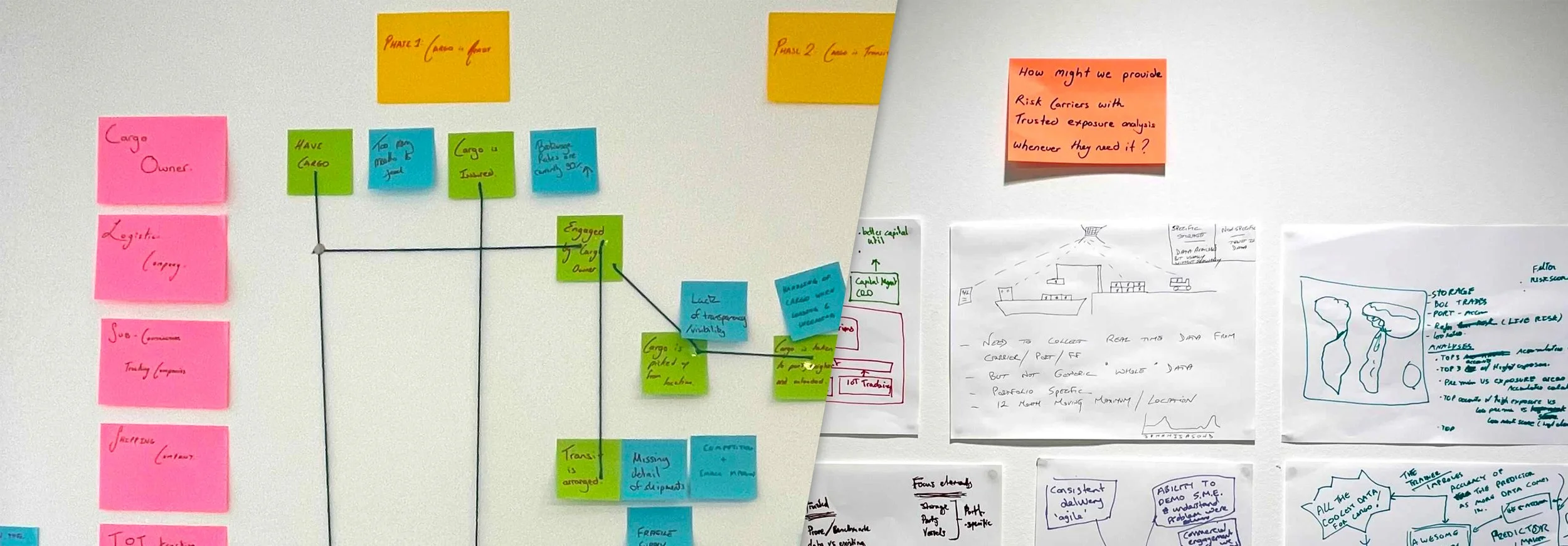
Workshops to synthesise domain knowledge
Continuous collaboration with customer-facing teams
Through this process, we identified two primary personas:
Senior Underwriters (focused on execution and decision-making)
Underwriting Managers (focused on oversight and portfolio performance)
This helped us build shared empathy across the organisation and align product decisions with real user needs.
Through this multi-layered research approach, we built understanding by triangulating insights from different parts of the organisation. Since direct end-user access was limited, subject matter experts (SMEs) played a critical role in representing real underwriting behaviours and decision-making patterns. Their input helped bridge gaps between product assumptions and real-world operational context, particularly around how risk is evaluated under time pressure and uncertainty.
Workshops were used to synthesise and align this knowledge across disciplines, ensuring that insights were not only captured but also translated into shared understanding within product, design, and engineering teams. These sessions were key in turning fragmented domain knowledge into coherent product direction and ensuring consistency in interpretation across stakeholders.
Ongoing collaboration with customer-facing teams provided a continuous feedback loop from the field, helping to validate assumptions and surface emerging user needs based on live client interactions. This ensured that the product remained closely aligned with real-world usage patterns and commercial conversations.
Alongside qualitative research, we also leveraged Google Analytics data from the existing product to understand actual user behaviour at scale. This helped identify usage patterns, friction points, and drop-off areas within key workflows, providing an important quantitative layer to complement SME insights and stakeholder feedback.
Through this combined approach, we identified two primary personas:
Senior Underwriters (focused on execution and decision-making)
Underwriting Managers (focused on oversight and portfolio performance)
Defining these personas helped structure decision-making and prioritisation across the product. It created a shared language for understanding different user needs and ensured that design decisions were grounded in both operational execution and strategic oversight perspectives.
Problem Definition
Key problem statements included:
Underwriters lacked centralised access to critical risk data
Data fragmentation prevented a holistic view of exposure and claims
Existing tools did not support efficient portfolio analysis
Decision-making was slowed by manual processes and poor data visibility
We used “How Might We” workshops to break down these challenges and explore targeted solutions.
Data Modelling & Visualisation
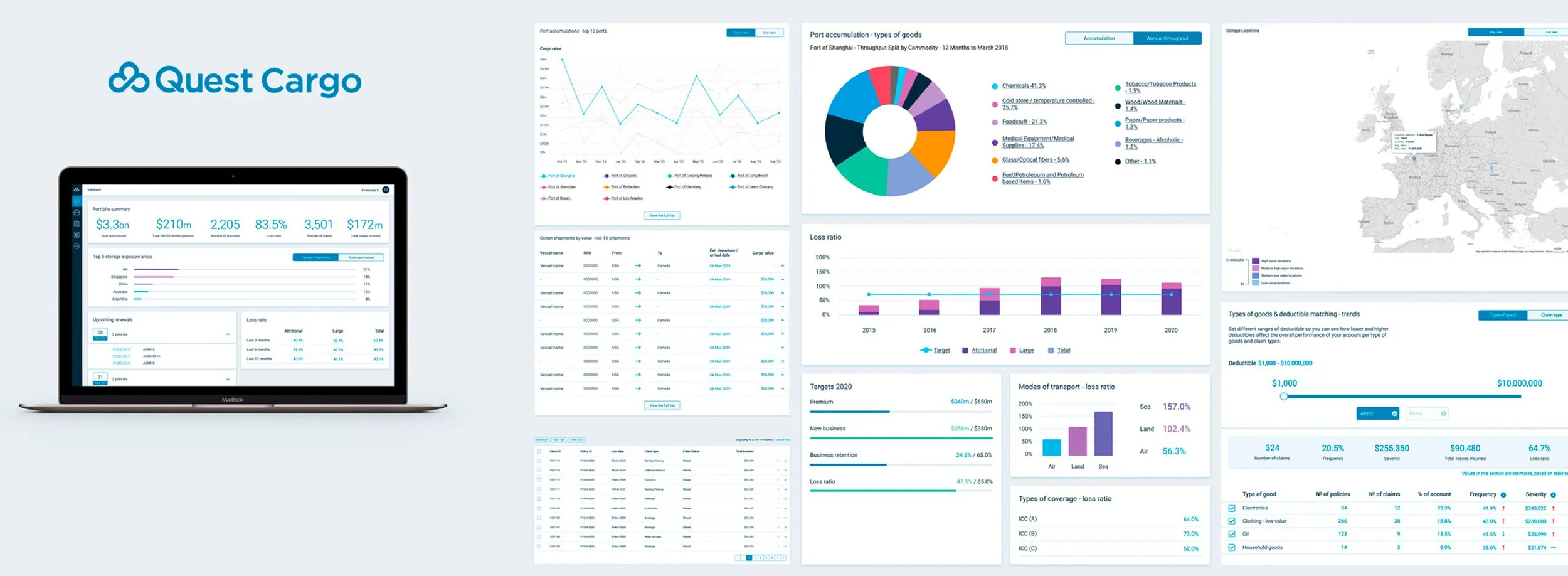
A significant part of the product focused on translating highly complex datasets and dense visual information into clear, actionable insights for underwriting decision-making. Both the underlying data structures and the interface requirements were inherently complex, requiring careful interpretation and abstraction to avoid overwhelming users while still preserving analytical depth.
We collaborated closely with the data science team through structured workshops to build shared understanding of the underlying risk models, data relationships, and analytical logic driving the platform. These sessions were essential in unpacking highly technical concepts and ensuring that both design and product teams had a clear grasp of how risk signals were generated and how they should be meaningfully exposed to end users.
From this foundation, we worked together to define meaningful and usable data representations, translating statistical outputs and model-driven insights into structures that could support real-world underwriting decisions. This included identifying what needed to be surfaced, what needed to be summarised, and what should remain available only at deeper levels of interaction.
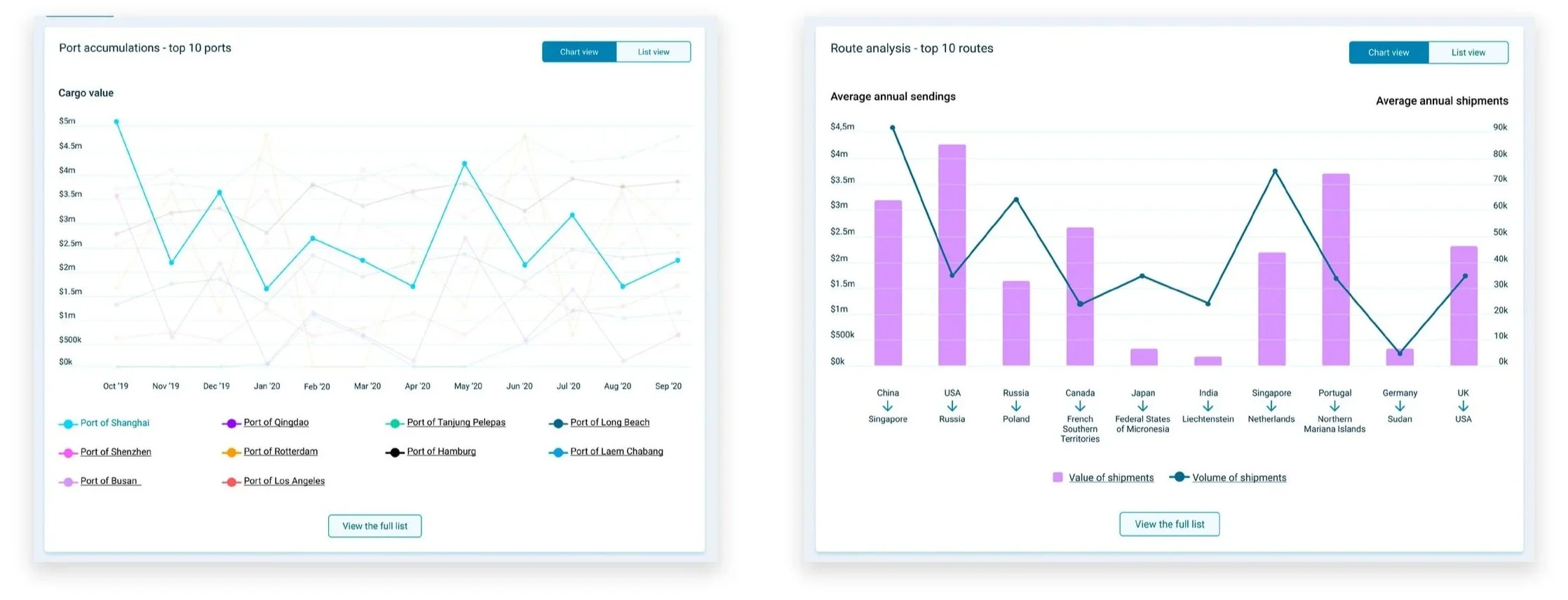
A key focus of the design work was creating intuitive visualisations for complex datasets, where clarity, hierarchy, and interaction design were critical. The challenge was not only to present large volumes of information, but to ensure it could be understood quickly and acted upon with confidence in high-pressure environments.
This close collaboration ensured that the product delivered not just raw data, but true decision-ready insight, turning complex analytical outputs into a usable and trusted experience for underwriters.
Design & Validation
The design process was highly iterative and collaborative, with a strong emphasis on early validation to reduce risk in a complex, data-heavy domain. A key part of the internal validation approach involved facilitating usability testing sessions using both wireframes and high-fidelity prototypes created in Axure. These sessions allowed us to quickly surface usability issues, test interaction patterns, and refine workflows before committing to development, ensuring that design decisions were grounded in real user behaviour rather than assumptions.
For external validation, high-fidelity prototypes were used in collaboration with subject matter experts (SMEs) to gather structured feedback from prospective clients. This approach helped validate core product assumptions early, particularly around how underwriters would interpret and act on complex risk data. It also provided valuable insight into how the product would perform in real-world commercial discussions, allowing us to adjust flows and interfaces before engineering investment.
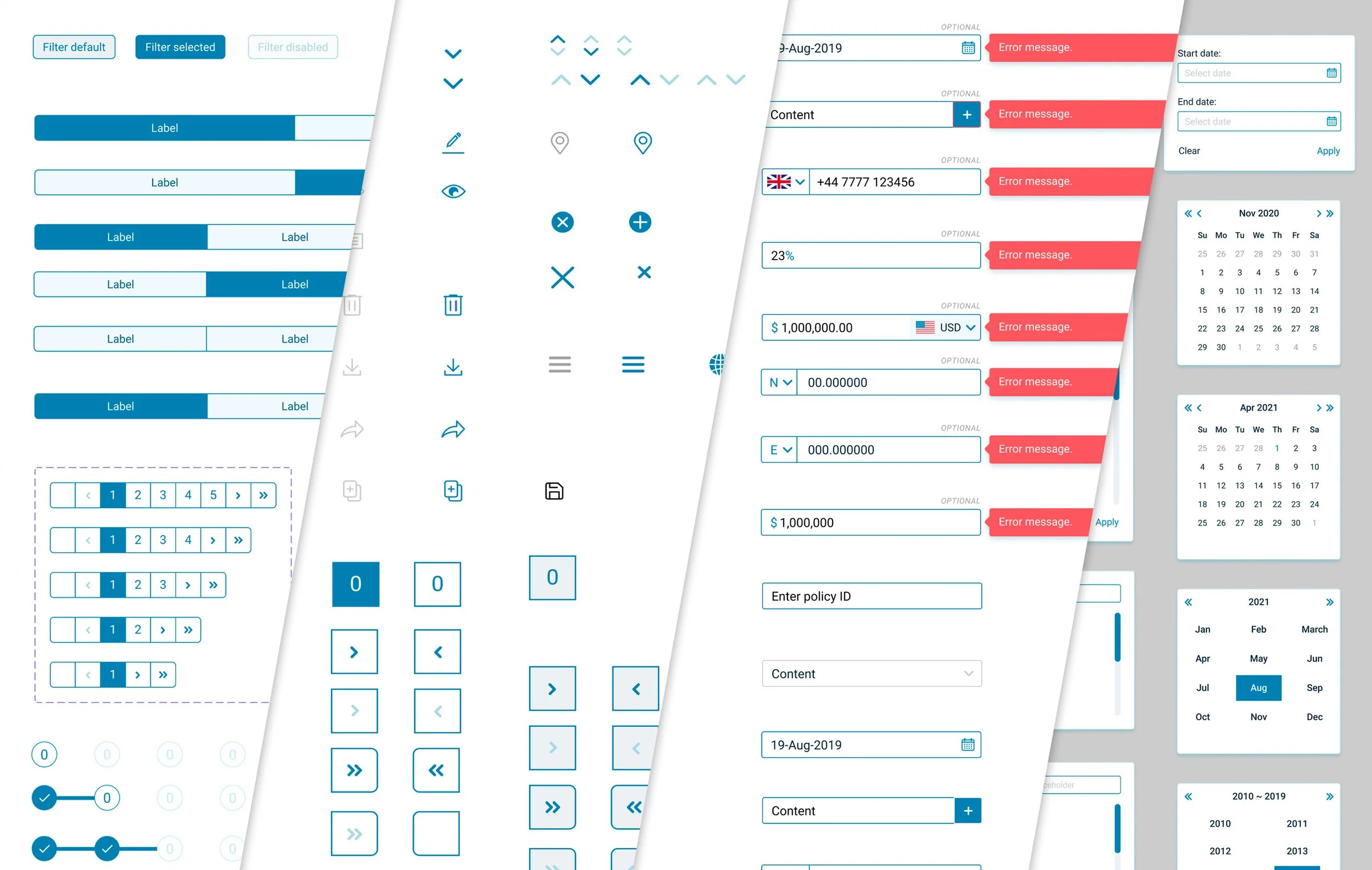
Beyond validation, the creation of high-fidelity designs also played a critical role in establishing the foundation of the design system. The patterns, components, and interaction models developed through this work were reused across other products within Concirrus, ensuring consistency across the broader product suite. This helped align previously fragmented interfaces into a more cohesive experience and supported a unified visual and interaction language across all product offerings.
MVP Delivery
The MVP phase required constant balancing between delivery constraints, evolving UX strategy, and strong commercial pressure to enter the market quickly. As priorities shifted across the business, scope was continuously reassessed to ensure that the most critical functionality could be delivered without compromising the overall product vision. This often meant making pragmatic decisions around simplification, deferring non-essential features, and adapting design plans to match engineering capacity and time constraints.
Throughout the process, the focus remained on protecting the core user workflows while ensuring the product could still provide meaningful value at launch. This required ongoing reprioritisation and close collaboration between product, design, engineering, and commercial teams to align on what was essential for initial release versus what could be iterated on post-launch.
Despite multiple pivots and deliberate scope reductions, the team successfully delivered a fully functional MVP that was stable, usable, and aligned with the core underwriting use case. The product was also successfully used to onboard the first client, which served as a critical validation point for both the product direction and underlying assumptions. This early client adoption confirmed that the core experience addressed real market needs and provided a strong foundation for further iteration, expansion, and scaling of the platform.
Post-MVP & Continuous Discovery
Following launch, the product transitioned into an ongoing continuous discovery and iteration cycle, where development was directly shaped by real client usage, feedback loops, and evolving commercial priorities. Rather than treating the MVP as a fixed release, we used it as a learning platform to continuously refine workflows, improve usability, and expand into additional product streams based on validated needs.
Post-launch discovery became embedded into the product lifecycle, with regular input from clients, customer-facing teams, and internal stakeholders. This allowed us to iteratively enhance core underwriting workflows, reduce friction in high-complexity areas, and progressively expand the platform’s capabilities while maintaining alignment with real-world usage patterns and business objectives.
Analytics, Measurement & Product Performance
We implemented a multi-layered measurement framework that combined product analytics, user experience insights, and commercial performance metrics to create a holistic view of product success.
On the behavioural and UX side, we used Google Analytics to track user journeys, feature adoption, and engagement patterns across key workflows. In parallel, Hotjar was used to gain qualitative behavioural insight through session recordings, heatmaps, and interaction tracking, helping us understand where users struggled, hesitated, or dropped off in complex flows.
These insights were combined with structured UX and business metrics to ensure alignment across user value and commercial outcomes:
User Experience Metrics
Satisfaction signals (NPS, in-app surveys, support feedback)
Efficiency metrics (task completion rates, workflow speed, DAU/WAU/MAU activity ratios)
Effectiveness indicators (error rates, failed actions, and task success rates)
Business Metrics
Revenue per customer and account expansion
Customer acquisition cost (CAC)
Customer lifetime value (LTV)
Churn, retention, and upsell performance
This integrated approach ensured that product decisions were not based on assumptions or isolated feedback, but grounded in a clear understanding of how usability improvements directly impacted adoption, retention, and commercial performance.
Product Enablement
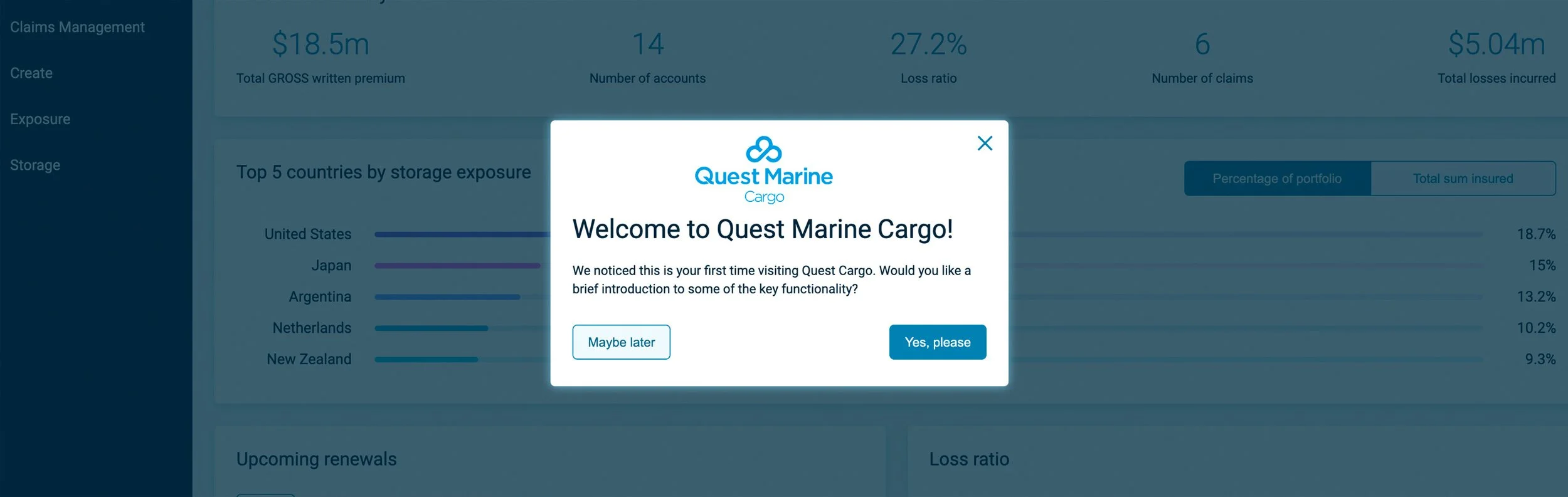
To improve adoption and reduce friction across increasingly complex workflows, we introduced a structured approach to product enablement, focused on supporting users at the point of need. This included in-product guidance for critical underwriting processes, supporting knowledge base content, and targeted assistance for high-value workflows where errors or misunderstandings had the greatest impact.
A key shift during this phase was introducing a more deliberate product-led approach to onboarding and user education, moving away from heavy reliance on external training or account management support. This included embedding more interactive guidance directly into the product experience and ensuring users could learn complex workflows through doing, rather than relying solely on documentation or SMEs.
Impact
The product delivered strong and measurable outcomes across both user and business dimensions. It successfully supported the onboarding and integration of enterprise clients, validating both the core product direction and underlying underwriting workflow assumptions in real-world environments.
From a user perspective, the platform significantly improved data accessibility and decision-making speed for underwriters, enabling more efficient interpretation of complex risk and portfolio information. This directly contributed to improved workflow clarity and reduced friction in high-stakes decision processes.
We also introduced more structured user testing practices into the organisation, making usability validation a consistent part of the product lifecycle rather than an occasional activity. This helped the team identify usability issues earlier, validate assumptions faster, and continuously improve the product based on real user behaviour. Over time, this contributed to a stronger culture of experimentation, feedback, and iterative improvement across product development.
Commercially, the product helped strengthen client engagement throughout the discovery and iteration process, creating tighter feedback loops between users, product, and commercial teams. This not only improved product-market alignment but also increased trust and confidence in the platform during early-stage deployments.
The work established a scalable and extensible product foundation, enabling future expansion into additional products while maintaining consistency, usability, and alignment with both user needs and business objectives.